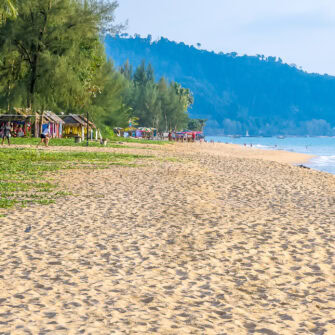
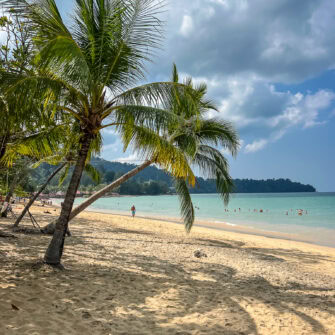
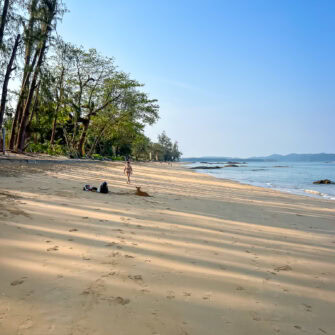
Bang Niang can be called the best of all the beaches at the Khao Lak resort. There’s enough developed infrastructure for most holidaymakers, but it’s not noisy at the same time.
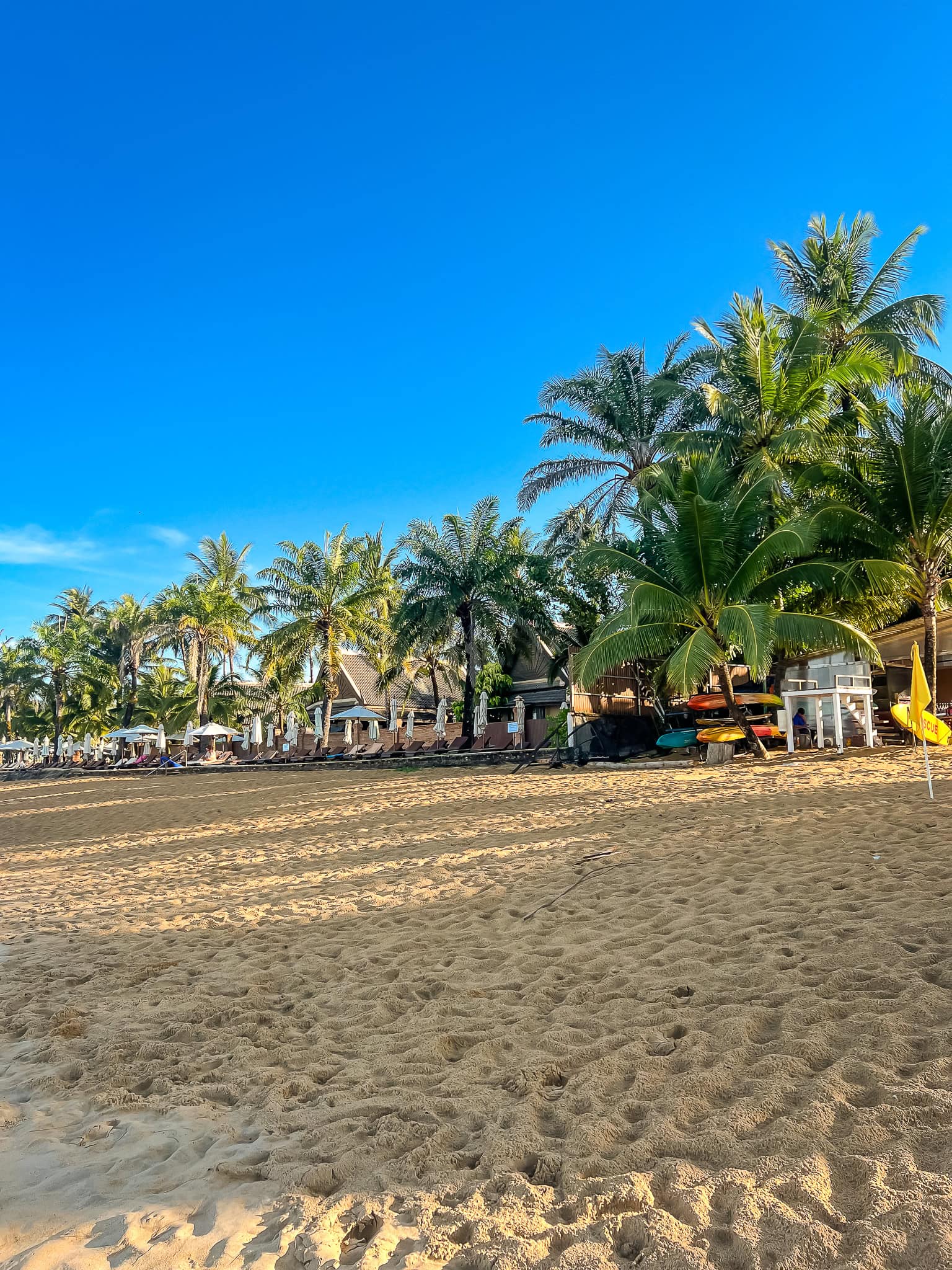
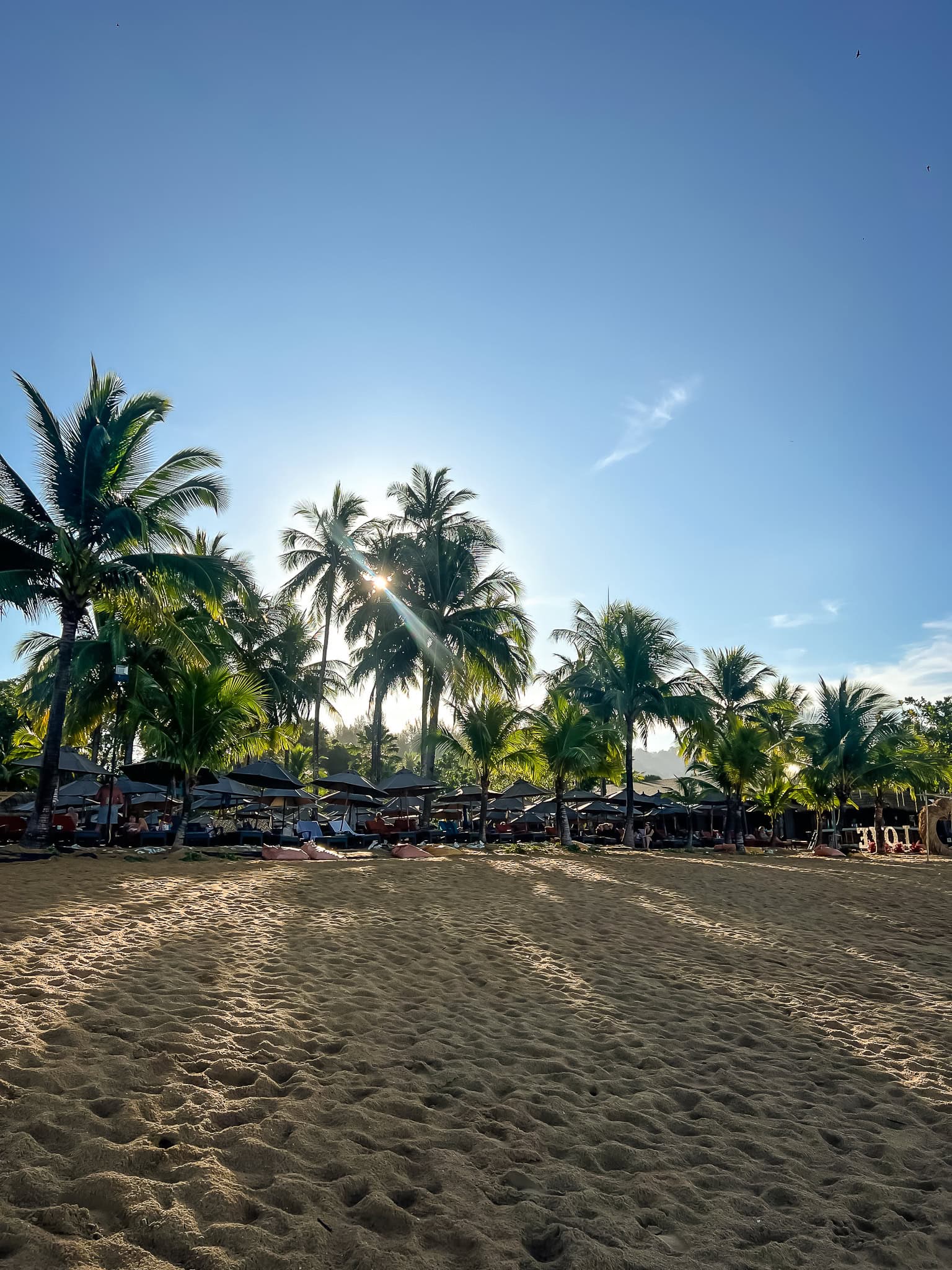
The beach itself is wide and bordered by palm trees and casuarinas. Along its entire length you’ll find beach cafés, deck chairs and umbrellas, with many hotels extending their grounds right to the shore. This beach struck me as a sensible balance between civilisation and crowds.
Who’s this beach for
Bang Niang Beach is perfect for travelers seeking a balanced beach experience with good infrastructure but peaceful atmosphere. It’s ideal for those who want civilized amenities without crowds and noise. The beach suits holidaymakers who appreciate tidy, charming surroundings with plenty of accommodation options nearby.
About the beach
What makes it special
I liked the Bang Niang area most of all. It’s somehow charming, peaceful and tidy. There are lots of hotels here and pleasantly designed little cafés. That’s exactly the impression it created.
From the Phetkasem Highway, which runs along the coast, Bang Niang Beach Road branches off perpendicularly for about 0.6 miles (a kilometre) – running from the highway straight to the shore. The main infrastructure of this resort area is concentrated along this road and its adjoining side streets.
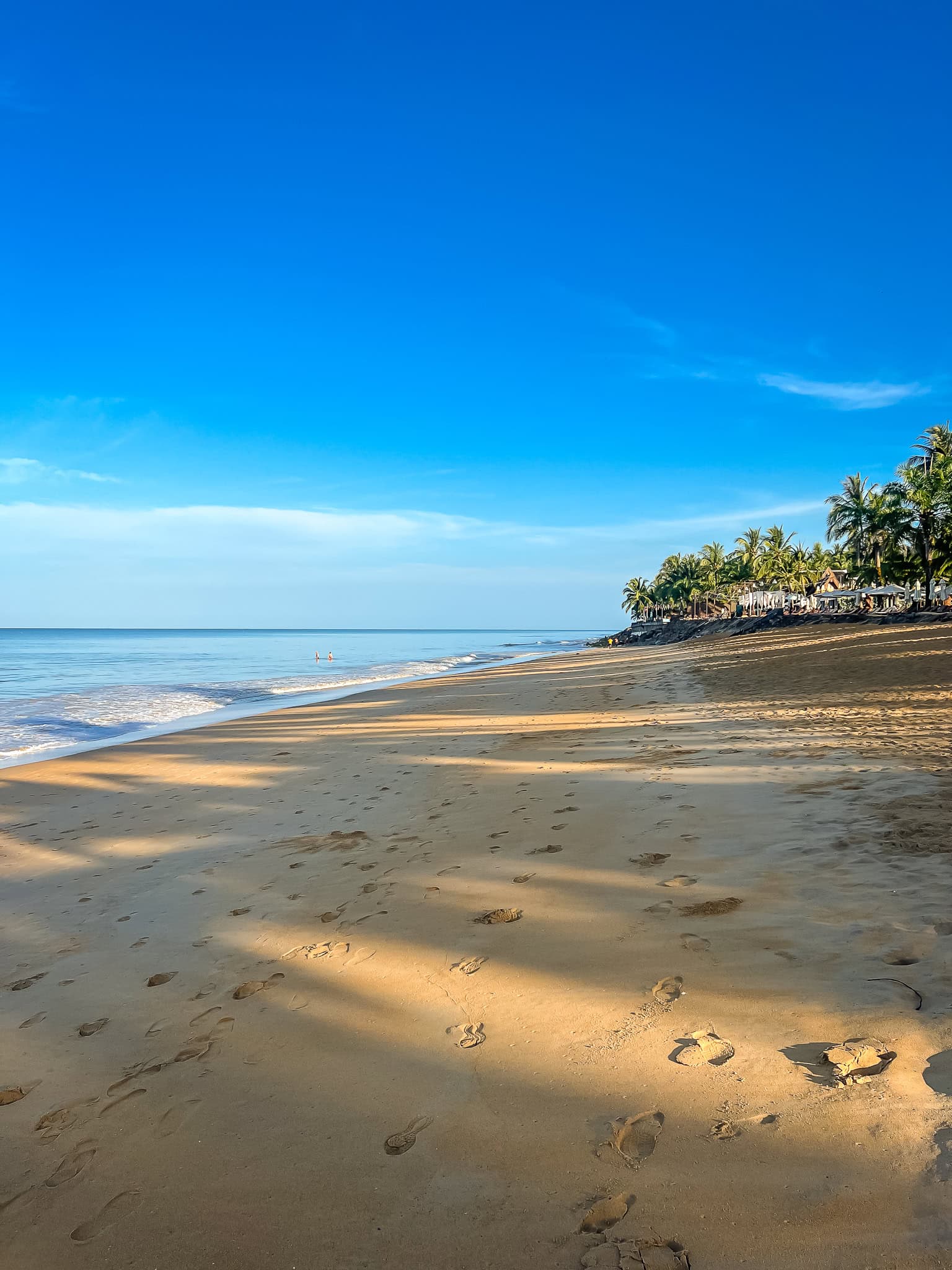
This same street divides the beach itself into two notional parts: northern and southern. From where Bang Niang Road reaches the sea, and further north (to the right), there are stone embankments and concrete walls reinforcing the shore (visible in photos), alternating with strips of beach.
The walls form terraces where the sea-facing hotels and cafés have their access points. At high tide in this hotel area, the sea comes right up to the shore and you can’t walk through the water.
In the very northern part of Bang Niang the concrete ends and gives way to palm trees. This is the end of Soi 1, the street that runs parallel to the sea. It’s quite a secluded spot with little infrastructure – rather run-down with some rubbish about.
There aren’t many swimmers in the sea, but plenty of people strolling. A favourite pastime for holidaymakers during low tide is walking along the beach past the hotels, from south to north and back again.
Here stand recently built bungalow-type houses right on the shore, a palm grove grows, there are deck chairs with umbrellas for rent, and massages are done in the shade under thatched shelters. The northern part of Bang Niang beach ends at a river, beyond which lies an even more northern and deserted Khuk Khak beach.
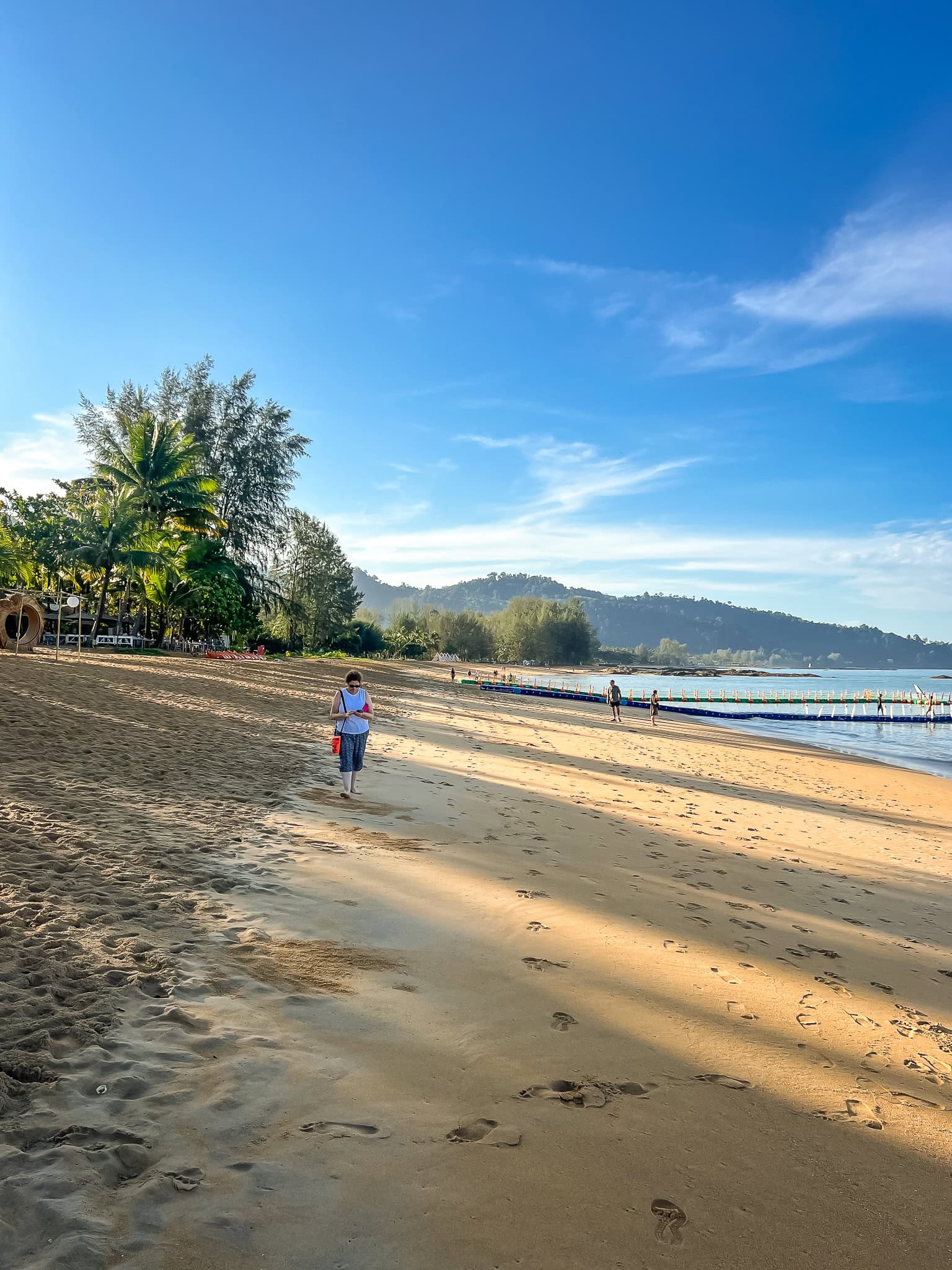
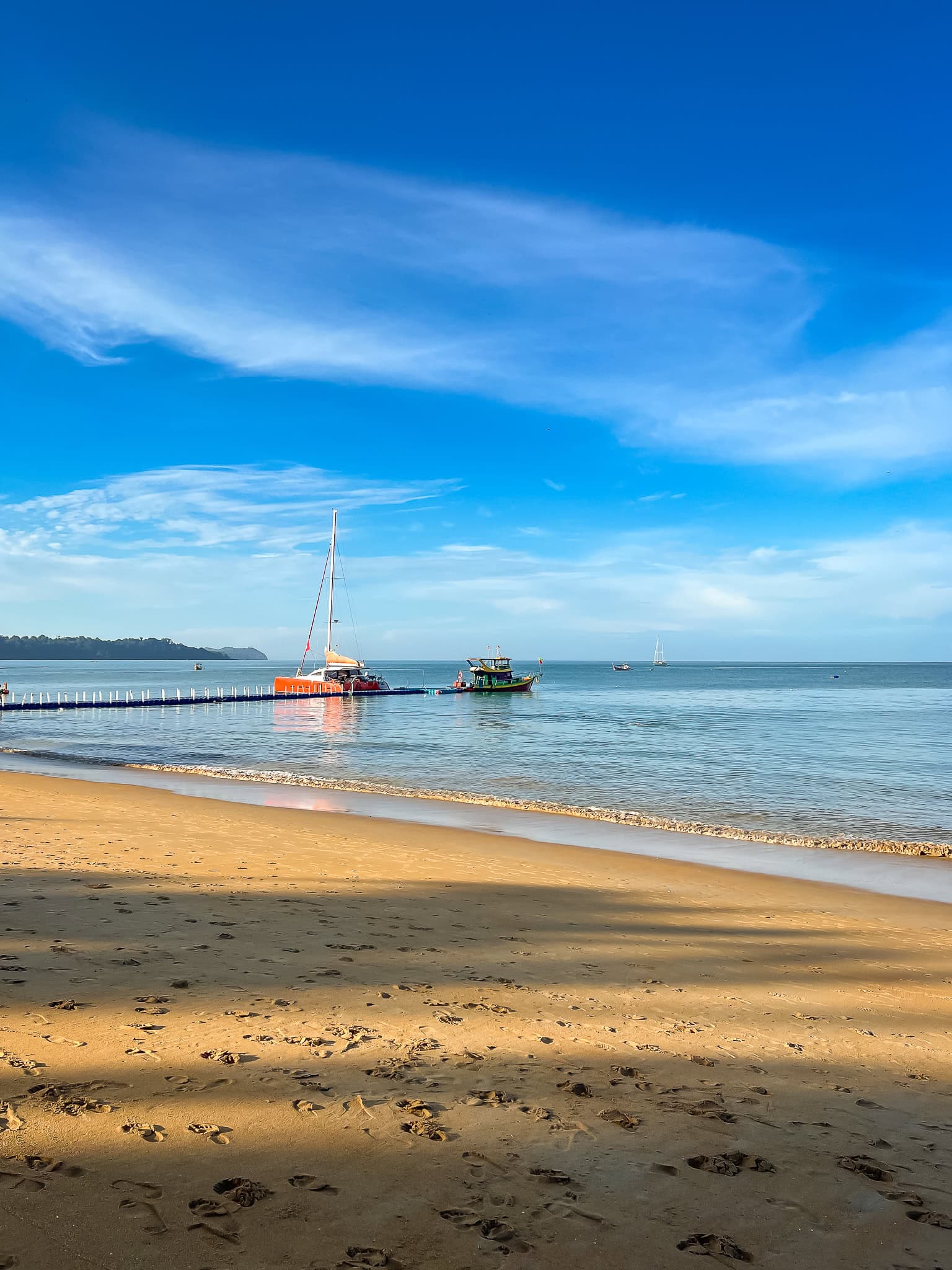
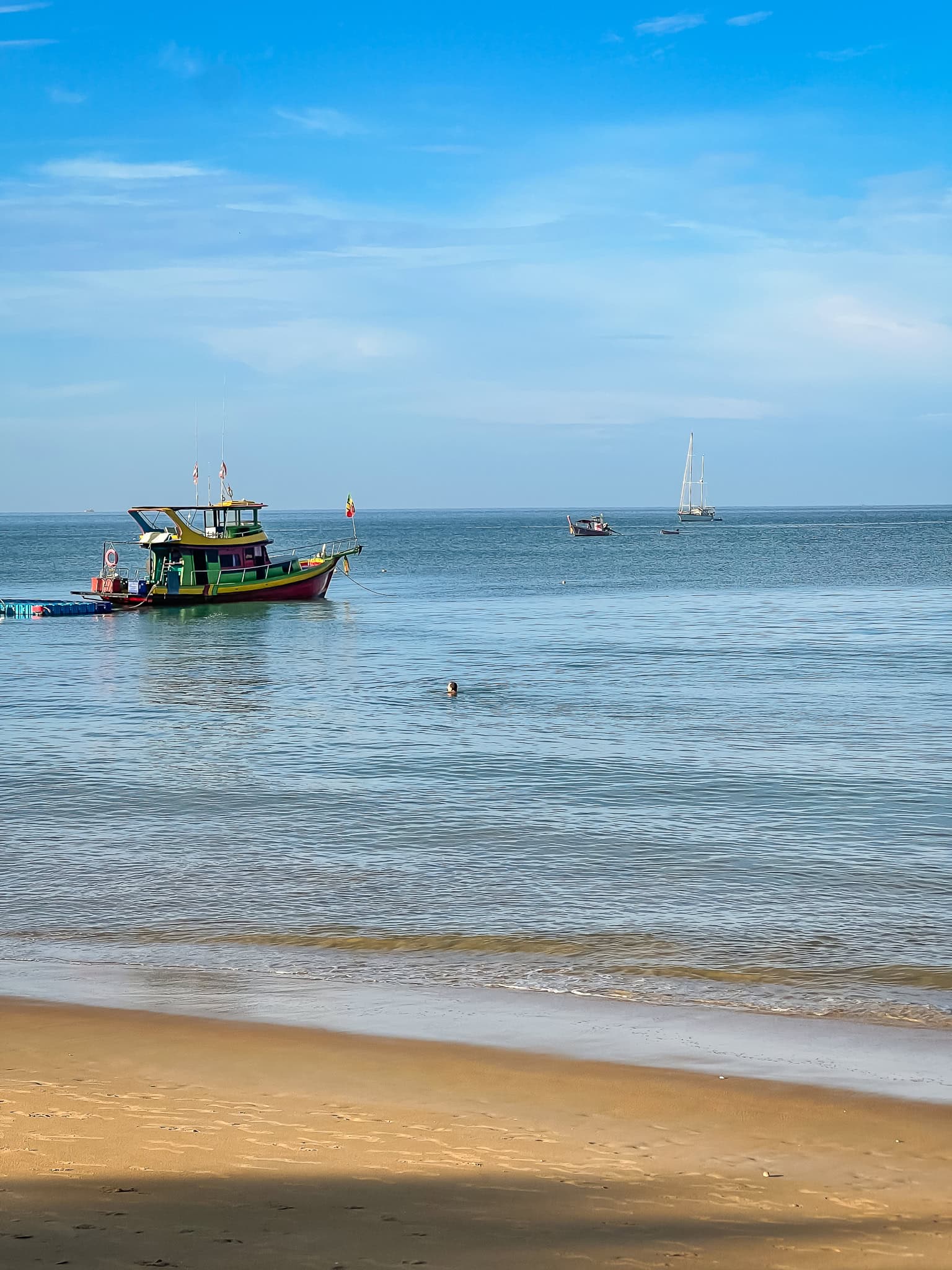
The southern part of the beach, to the left of Bang Niang Road (photo near the pontoon bridge), I liked most of all. Here the sand is yellow and fine, without stones or shells, the beach strip is very wide, and there’s no problem swimming even at low tide.
A bit further south are large black boulders in the water, and beyond that a small river, after which Nang Thong beach begins.
Getting in the water
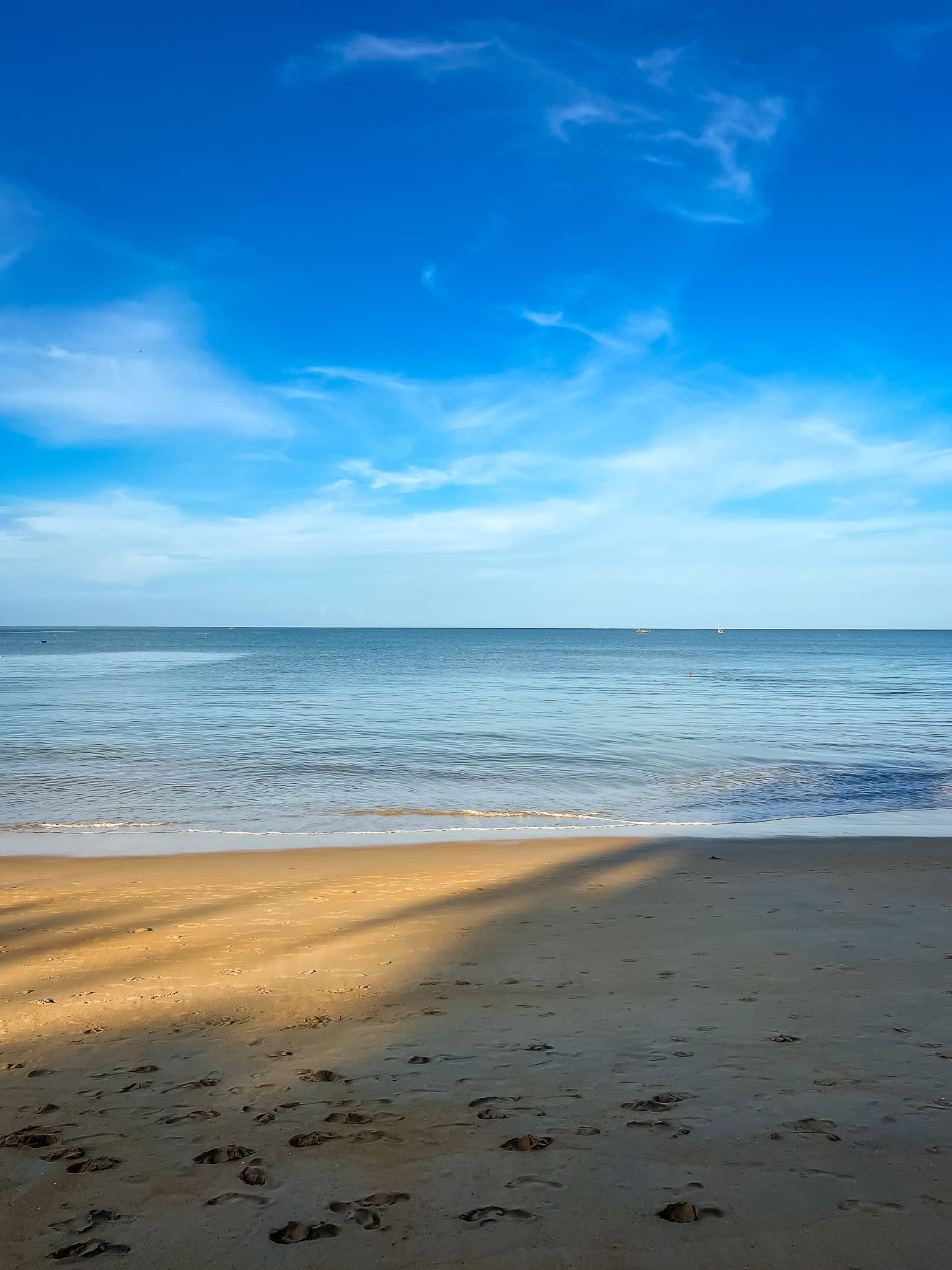
In the northern part of the beach during low tide it’s shallow and rather murky. In the southern part the beach is wide, and at low tide the sand strip becomes even wider. The sea by the shore is shallow, but walking a bit further into the water you can already swim.
The shore slopes into the water at a noticeable angle, so during high tide the depth increases quickly. The most comfortable section of beach is located in the area where the Ramada Khao Lak Resort is situated.
Even further south from the beach, a ridge of black boulders extends into the sea. However, they don’t interfere with swimming or walking along the beach.
Waves
Large waves occur in this area during summer season.
Loungers and shade
In the northern part of the beach, behind the hotels near the stone embankments, more palm trees and broad-leaved trees grow. There are also deck chairs and umbrellas for rent, and massage huts in the shade.
In the southern part near the pontoon bridge and hotels there are also deck chairs with umbrellas for rent. Both palm trees and casuarinas grow here, providing shade in the first half of the day as the sun rises right behind them in the morning.
By midday the shadows almost disappear, and towards sunset the sun shines from the direction of the sea with no natural shade on the beach.
Video of the beach
Beach photos
What’s nearby
Food and drink
Around the main street of the Bang Niang area there are many different cafés and shops. Generally, the resort infrastructure in Bang Niang is quite developed. On the highway there’s a market and 7-Eleven.
The market operates on Mondays, Wednesdays and Saturdays, roughly from lunchtime until dusk.
Activities and attractions
Among the attractions in the beach area are several temples, the Tsunami Museum, as well as transvestite shows and various pleasant cafés on the shore and inland.
Where to stay
Most of the small hotels in the Bang Niang area aren’t located along the sea, but on streets parallel to it, situated along the main Bang Niang Beach Road, which runs from the Phetkasem Highway to the sea. Cheaper accommodation can be found on the highway – I stayed there at 813 Hostel (though it’s actually a hotel).
But then I moved to a quiet spot in affordable bungalows at The Garden, 650 feet (10 minutes’ walk) from the sea. Current accommodation prices are best checked on search engines as they depend on the season.
I’d recommend staying roughly in the middle of Bang Niang Road, just around The Garden hotel, where there’s the greatest concentration of all the little cafés and hotels for every taste – the sea is nearby and it’s not far to the highway/market/7-Eleven.
But if you don’t fancy walking to the sea, then stay at one of the hotels from the list – you won’t go wrong.
- The Garden Khao Lak
- Ramada Resort by Wyndham Khao Lak
- Mukdara Beach Villa & Spa Resort
In the northern part of the beach along Soi 1 there are also plenty of beachfront hotels, but I wouldn’t stay too far from Bang Niang Road, or you’ll have to do a lot of walking. Beachfront hotels with good grounds:
- Chongfah Resort Khao Lak
- Casa De La Flora
- The Nest Box Khaolak Resort
Getting there
You can reach the beach via the main Bang Niang Road from the Phetkasem Highway, without turning anywhere. This will take you to the part of the beach where there are concrete reinforcing walls. From there you can turn right onto Soi 1 and moving along it, access the beach through any café, resort, or side street.
Alternatively, you can turn off Bang Niang Road onto one of the parallel side streets just past Rabeang Guest House, and reach the beach south of the main street, where there’s no concrete at all.
Beach location
Bang Niang Beach is located in the Khao Lak resort area on Thailand’s Andaman Sea coast. The beach is accessed via Bang Niang Beach Road, which runs perpendicular from the Phetkasem Highway for about 0.6 miles (1 kilometer) straight to the shore.
The beach is positioned between Khuk Khak Beach to the north (separated by a river) and Nang Thong Beach to the south (also separated by a small river and black boulders). The main resort infrastructure is concentrated along Bang Niang Road and its side streets, making it one of the most developed yet peaceful areas in Khao Lak.