
Karon is a dangerous beach. Yes, it’s beautiful. Yes, it has singing sand (though really it just crunches underfoot) and stunning sunsets. Karon has several other advantages that put it in the top five beaches of Phuket.
But personally, one harsh reality about Karon frightens me – the constant rip currents. There are many spontaneous rip currents here. Read linked article if rip currents mean nothing to you, and after reading – choose another beach for swimming. Or strictly follow the lifeguards’ instructions and beach flags.
Who’s this beach for
Karon Beach is best suited for experienced swimmers who understand ocean safety and rip current dangers. It appeals to visitors seeking a wide, beautiful beach with amenities and nightlife but who prioritize scenery over safe swimming. The beach attracts those staying in luxury beachfront hotels and tourists who enjoy active entertainment options.
About the beach
Karon Beach sits between Patong to the north and Kata to the south. The beach stretches for about 2 miles (3 km), and it’s incredibly wide, dozens of feet across with a gentle slope towards the water.
The sand at Karon is fine, almost white with a yellowish tinge. It crunches like snow when you walk on it, earning its nickname “singing sand”, though squeaky or crunchy would be more fitting.
During the high season, the water at Karon is clean and crystal clear. In the off-season, large waves stir up the sea, making it lose its appeal.
What makes it special
Karon features distinctive “singing sand” that crunches underfoot like snow, creating a unique sensory experience. The beach offers stunning sunsets and ranks among Phuket’s top five beaches.
Its incredible width provides ample space even during busy periods. The fine, almost white sand with yellowish tinge creates a beautiful contrast against crystal-clear water.
The beach’s size and location between Patong and Kata make it a central hub with excellent connectivity to other popular destinations.
Getting in the water
The sea at Karon is deep with a gentle slope towards the water. However, this beach is particularly dangerous due to constant rip currents.
Even during the calm season, red flags often line the shore, along with flags marking rip currents spotted by lifeguards. Besides these, there are spontaneous rip currents that are only discovered when they’ve already pulled someone out.
During the calm season, the sea is quieter and swimming isn’t quite as dangerous, but caution is always required.
Waves
During high season, the water remains relatively calm though rip currents are still present. Swimming conditions are safer but never completely risk-free.
In summer and off-season, you’ll find large waves that stir up the sea and significantly increase danger levels. Lifeguards become particularly strict during these periods.
The waves can be attractive for experienced surfers, but casual swimmers should avoid the water when large waves are present.
Loungers and shade
Karon has some trees, but they provide barely any shade, and what little there is disappears by noon. Once the sun moves to Phuket’s western side, there’s nowhere to hide except under rented umbrellas.
Between the promenade and sand, there’s a narrow strip of grass with trees that occasionally widens enough for people to shelter in their shade.
Shade is scarce and demand is high, so expect to jostle for space. The locals have created makeshift sand loungers and rent these to tourists for 100 baht.
Video of the beach
Beach photos


What’s nearby
Food and drink
The beachfront cafes are typically expensive and often disappoint with their menu choices. Food at beach eateries starts from 70 baht per dish (mainly chicken with rice) and up.
Some restaurants offer free salad bars, which consist of cut vegetables and fruits that you can snack on while waiting for your ordered dish.
Along the streets leading to the beach and along the road, you’ll find various dining options beyond the overpriced beachfront establishments.
Shopping
Along the streets leading to the beach and along the road, you’ll find 7-Eleven mini-marts and other shops. The road isn’t too densely built up, but there are plenty of spots for shopping enthusiasts.
You’ll discover markets, shops, and various retail outlets throughout the area. There’s a good selection for everyday needs and tourist souvenirs.
Activities and attractions
Karon’s infrastructure is fairly rich in tourist services and rentals. There’s plenty to try in terms of entertainment, both active and relaxed.
On the hill behind Kata Beach, there’s the Karon Viewpoint. Karon has loads of travel agencies offering tours, both around Phuket and to neighbouring islands.
There’s surfboard rental, mini-golf at Dino Park, and a Buddha statue on the mountain near the beach. Evenings at Karon are quite lively, especially near karaoke venues and night bars.
There are a couple of nice gazebos by the road with sea views. You can walk from Karon to Kata in about 20-30 minutes.




Where to stay
Accommodation in Karon is expensive. It’s mainly large beachfront hotels, with cheaper hotels a bit further from the sea, small condos and very few private houses.
The “front line” behind the beach road is occupied by hotel giants like Hilton. You can book a fan room in a guesthouse from 350 baht per night.
The highest concentration of hotels is around the roundabout with the fountain, where the main beach road begins.
Recommended Hotels:
More Notable Hotels:
- Karon Sea Sands Resort & SPA 4
- Ramada by Wyndham Phuket Southsea 4
- Baumancasa Beach Resort 3
- Baan Karonburi Resort 4
- Woraburi Phuket Resort & SPA 4
In southern Karon:
Getting there
From Phuket Town by taxi or songthaew. Songthaew is the cheapest option – just 40 baht from Phuket Town.
Tuk-tuks are quite expensive – they ask for 200 baht from nearby Kata in the evening. Taking tuk-tuks in Karon isn’t worth it due to inflated prices and poor service.
To the airport by taxi goes through Phuket Town, taking an hour if there’s no traffic. Cost is 1500 baht and up. There are also motorcycle taxis, suitable for short distances.
Beach location
Karon Beach sits strategically between Patong to the north and Kata to the south on Phuket’s western coast. This central location makes it easily accessible from both popular tourist areas.
The beach stretches for about 2 miles (3 km) along the coastline, making it one of Phuket’s longest beaches. It’s positioned perfectly for stunning sunset views over the Andaman Sea.
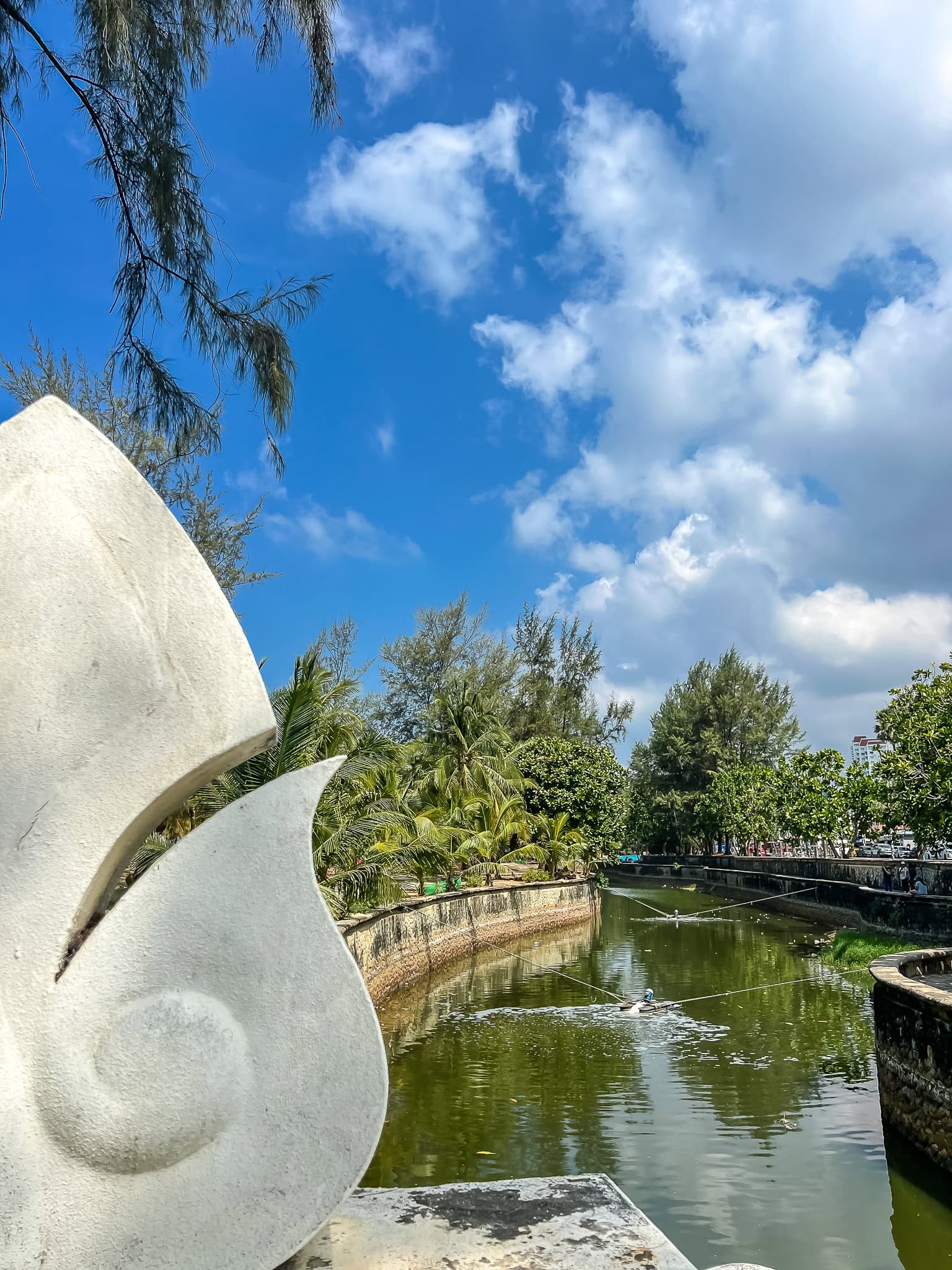
The area features a mix of beachfront development and inland attractions, with a park and small pond in the north. Further south, near a roundabout, streets lead inland to a Buddhist temple.
The beach’s wide geography and central location between major tourist hubs make it a popular base for exploring other parts of Phuket island.


